The right paper bag handle depends on what your customer will carry, how they will carry it, and how you want the bag to look. Cotton rope, ribbon, twisted paper and die-cut handles each offer a different appearance and grip. Before choosing one, consider the packed product, the bag construction and a physical sample—not just the handle in isolation.
Start with the way the bag will be used
Picture the complete purchase in the bag: the product, any inner box, tissue paper and other items that might be added at checkout. A small accessory in a box and several folded garments may need similar-looking bags, but the space and carrying requirements will differ.
Ask yourself:
- What is the total weight of the packed contents, including any inner packaging?
- Will a customer carry the bag briefly from a shop, or for longer while travelling?
- Should the handles fit comfortably in a hand, over a wrist, or over a shoulder?
- Does the opening need to be wide enough for a rigid box?
- Will the bag be packed and stored flat before use?
These answers give your supplier a starting point for reviewing the handle and the rest of the bag together.
Compare common paper bag handle styles
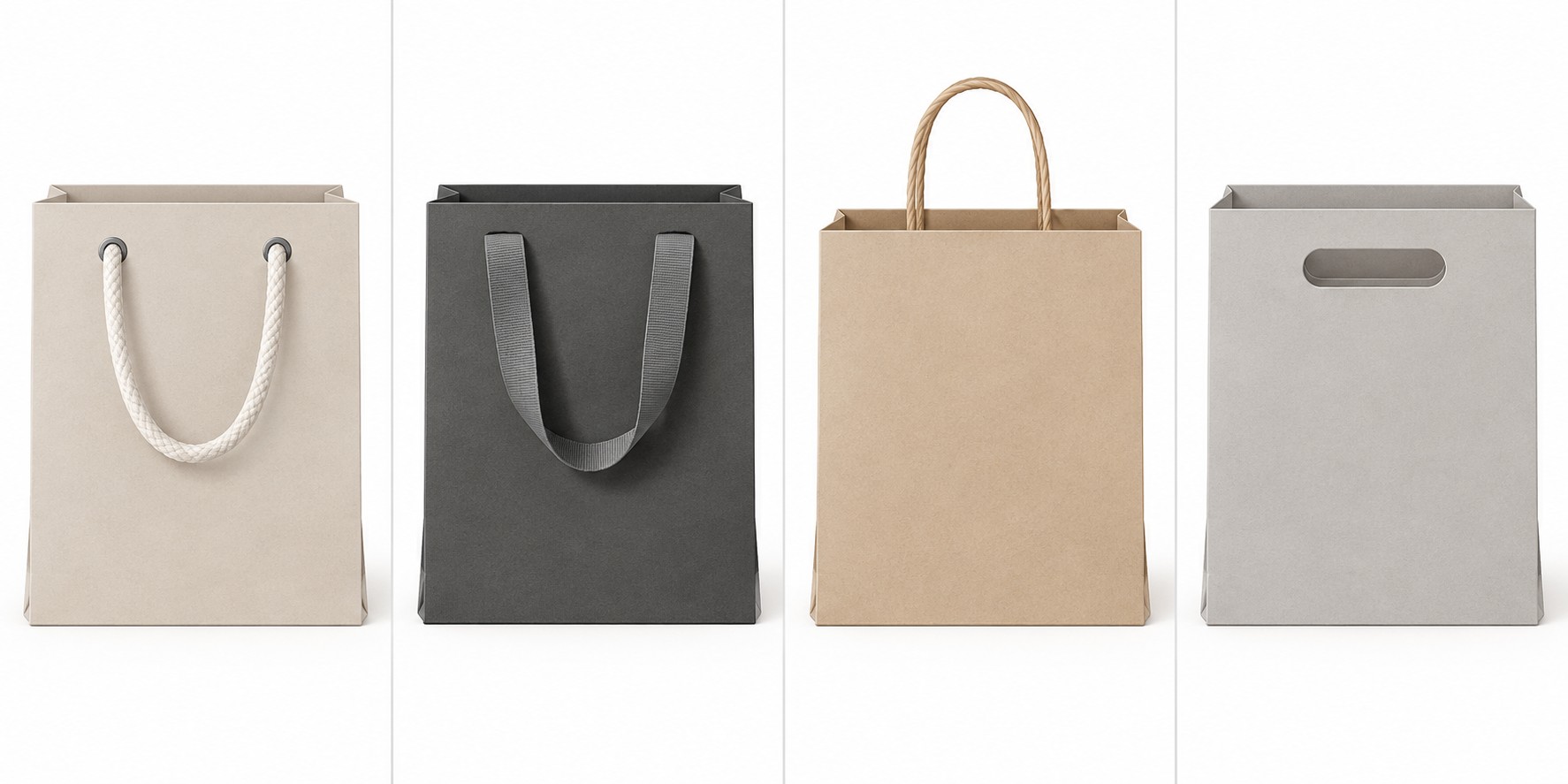
From left: cotton rope, ribbon, twisted paper and die-cut handles.
| If your priority is... | Start by considering | What to compare on a sample |
|---|---|---|
| A rounded cord to complement a fashion or accessory bag | Cotton rope | Cord diameter, loop length, attachment and grip with the packed contents. |
| A flat handle that coordinates with gift packaging | Ribbon | Material, width, colour, attachment and whether the ribbon twists when held. |
| A paper cord and an everyday shopping-bag appearance | Twisted paper | Cord and attachment construction, grip and the appearance of the finished bag. |
| A compact profile without a separate loop | Die-cut | Opening size, grip comfort, product clearance and reinforcement around the opening. |
For example, a clothing brand choosing between cotton rope and ribbon could request the same bag construction with each handle, then compare colour, grip and attachment with the same packed garment inside. A shop placing a rigid inner box in a die-cut bag should check that the box does not block the hand opening. These comparisons help narrow the options; they do not establish a load rating. These are starting points, not load ratings. A rope handle is not automatically stronger than a paper handle, and a die-cut handle is not automatically suitable for every lightweight product. The bag's paper, handle attachment, top edge and base all matter. Availability and suitable construction vary by project.
Cotton rope or ribbon: which should you choose?
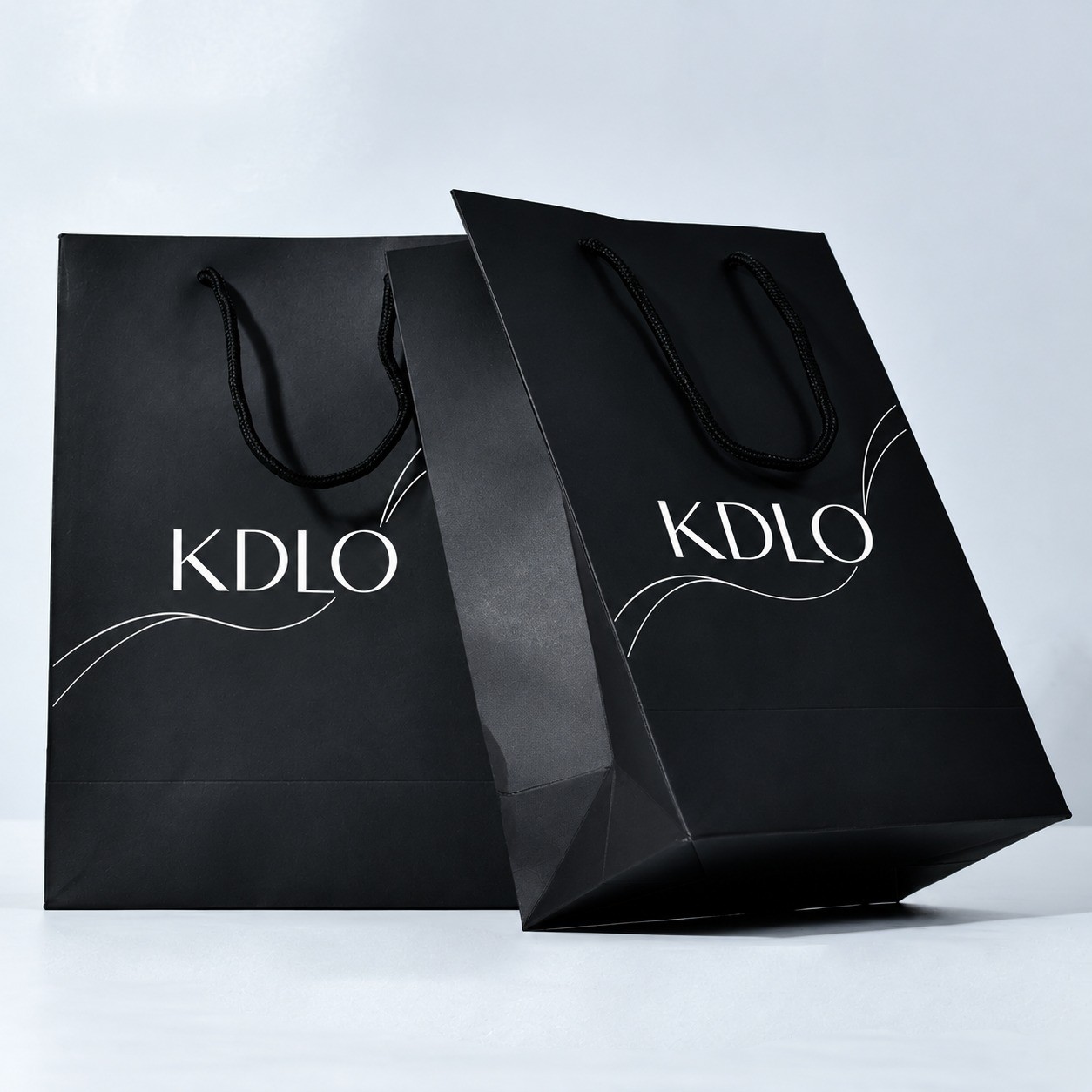
Black paper bags with cotton rope handles.
Cotton rope is worth considering when you want a rounded cord and a visible handle that complements the bag. Ask about cord diameter as well as colour: a thicker-looking cord changes the bag's appearance, but a photograph alone cannot establish how it will feel or perform when carried.
Ribbon offers a flatter profile and may suit a bag where the handle is part of the visual design. Ribbon materials and finishes vary, so request a sample if the texture, sheen or colour needs to coordinate with other packaging. Check whether the ribbon twists in the hand and whether the chosen loop length makes the bag easy to carry.
Both options need an attachment suited to the complete bag. Depending on the design, a handle may pass through holes and be secured inside the bag, or use another construction. Ask your supplier to show you the proposed attachment rather than assuming every bag uses the same method.
For one example of a rope-handle construction, see our black paper bag with cotton rope handles. Its handles pass through punched holes. The sample does not have a stated carrying-load rating, so share your intended contents and weight when discussing a similar project.
For a practical comparison, start with the appearance and carrying method you want. If a rounded cord is central to the design, review cotton rope first; if a flat band that coordinates with the rest of the packaging matters more, review ribbon. Ask for the same bag size and intended contents when comparing samples, and check both the grip and the attachment. Neither choice guarantees a particular load capacity.
When might twisted paper or die-cut handles make sense?
A twisted paper handle can be a useful option when you prefer a paper cord and a straightforward shopping-bag appearance. Check the proposed handle and its attachment on a finished sample. Paper handles vary in construction, so ask how the particular bag should be assessed for your intended contents.
A die-cut opening removes the separate loop and can give the bag a compact profile. It also changes how the bag is carried: the customer's fingers grip the opening itself. Check that the opening is easy to hold and that the space above it remains suitable for the bag and its contents. If a boxed product nearly fills the bag, make sure it does not obstruct the grip.
These styles are described as general options. Confirm availability and compatibility with your supplier for the specific bag you want to order.
How to describe handle length to your supplier
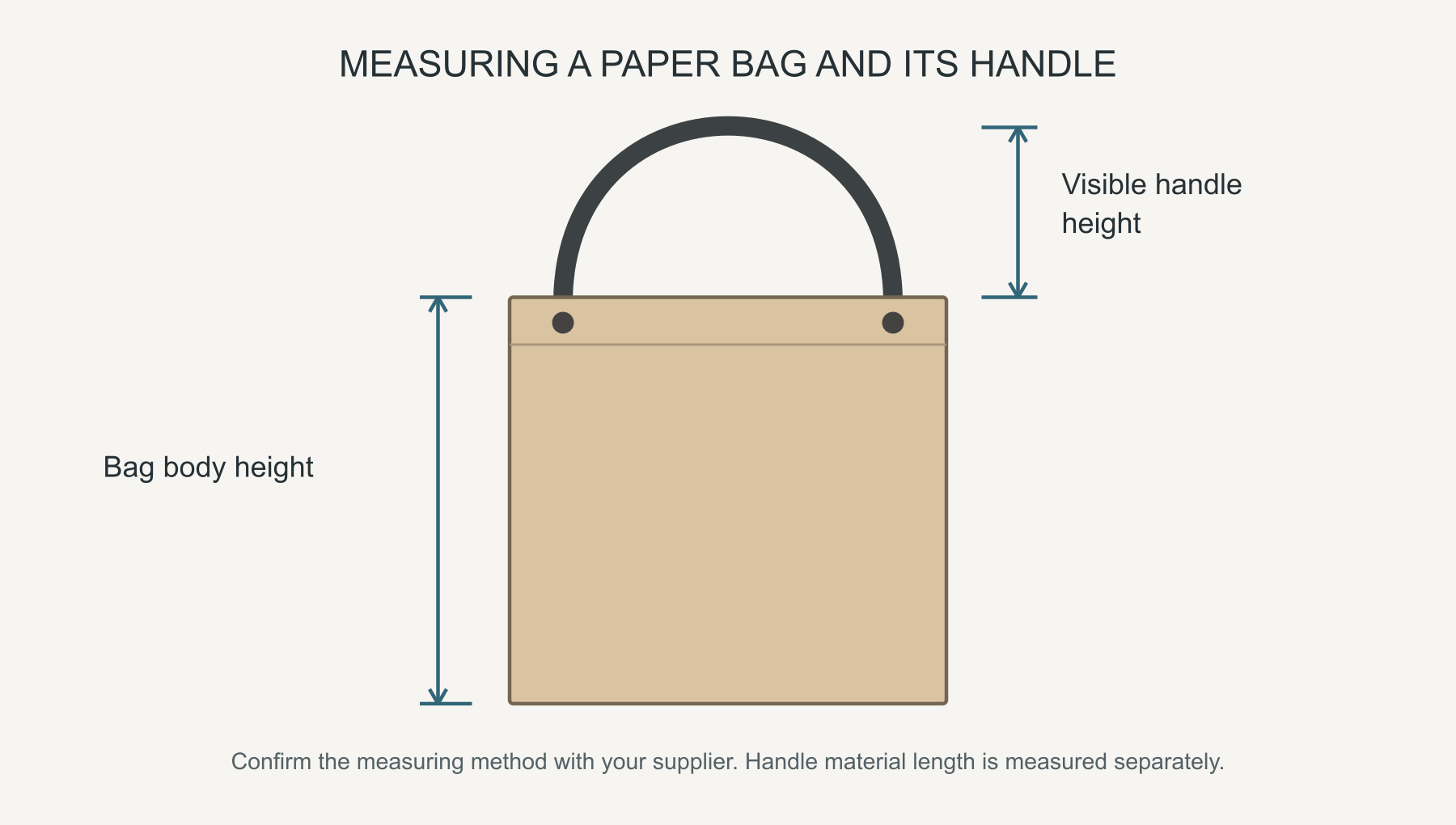
Bag body height and visible handle height are separate measurements.
“Handle length” can mean the length of the handle material or the height of the visible loop after it is attached. Those measurements are not interchangeable. For a raised loop, agree where the visible height is measured from and to—for example, from the bag's top edge to the highest point of the handle. The material length can also include portions used for attachment, depending on construction.
Tell your supplier whether you want to carry the bag by hand, over the wrist or over the shoulder. Specify the bag body height separately, use the same unit throughout, and confirm whether any overall height includes the handle. If you already have a comfortable bag, photographs and agreed measurements can provide a useful starting point. Check the final loop on a physical sample with the packed product inside.
Check the whole bag, not just the handle
The handle is one part of the carrying system. Before approving a design, review:
- Attachment: How is the handle fixed? Are knots, patches or other attachment details appropriate for this construction?
- Top edge: Is there a folded top or reinforcement around the handle area? Where is it placed?
- Bag body and base: Are the paper and base construction appropriate for the shape and weight of the packed contents?
- Handle dimensions: Is the loop length or opening size comfortable for the intended carrying method?
- Packing and opening: Can staff insert the product without catching the handle or damaging the bag?
Review a sample with the intended contents
Pack the sample as it will be used, including the product, inner box and other contents. Lift and carry it in the intended way, then examine the handle attachment, the paper around any holes or cut-outs, and the base. Record any looseness, tearing or noticeable deformation, along with the sample specification and the weight and arrangement of its contents. Check how easily the product goes in and comes out, and whether the grip feels comfortable.
This review helps assess fit and everyday handling. It does not establish a certified carrying capacity. If a load or durability requirement matters to the order, agree the test method, conditions and acceptance criteria with the supplier and request the relevant test results for the proposed construction. Reinforcement, attachments and performance vary between designs.
What to send your supplier
You do not need a finished specification to begin a conversation. The following details help a supplier understand your project:
- A description of the products and their packed weight, including any inner box.
- The desired bag width, gusset depth and height, if known. Say whether a height measurement includes the handles.
- Your preferred carrying method and the desired visible handle height or handle material length, if known. Identify which measurement you are providing.
- The look you want, along with any handle colour or material preference.
- The quantity, destination and desired delivery date, if known.
- Any requirements for testing, material claims or disposal information.
If you are unsure about the handle style, share a photo of the packed product and explain how the bag will be used. You can review suitable options with the supplier and confirm them with a sample.
Frequently asked questions
Are cotton rope handles stronger than ribbon handles?
There is no reliable answer from the material name alone. Cord or ribbon specifications, attachment, reinforcement, paper and base construction all affect the finished bag. Compare proposed constructions against your actual load and handling requirements.
How long should paper bag handles be?
Start with how the bag will be carried: in the hand, over the wrist or over the shoulder. Specify whether the measurement is the visible height of the attached loop or the total length of the handle material, and agree the measuring points with the supplier. Review the proposed length on a sample with the packed product inside before approving it.
Can a paper bag with rope or ribbon handles be recycled?
That depends on the handle material, coatings, other components and local collection rules. Ask for the materials in the proposed bag and check the applicable recycling guidance. Do not assume that a paper bag with non-paper handles can be recycled as one piece everywhere.
Can I change the handle on an existing bag design?
A different handle can require changes to the holes, top edge, attachment or reinforcement. Ask the supplier to review the proposed combination and confirm availability and sampling requirements for that particular design.
Explore our custom paper bags for examples, or share your packed product and carrying requirements when requesting a quote.